Stretching is a wonderful way to improve your flexibility, reduce muscle tension, and boost overall well-being. You don’t need a gym membership or fancy equipment to get started. With just a few simple moves, you can enjoy the many benefits of stretching right at home. This guide will walk you through the basics of stretching, safety tips, and easy routines perfect for beginners.
Why Stretch at Home?
Stretching regularly has a number of advantages:
– Improves flexibility: Helps your muscles and joints move more freely.
– Reduces stiffness and pain: Relieves tension built up from sitting or repetitive tasks.
– Enhances posture: Stretching tight muscles can correct imbalances.
– Boosts circulation: Increases blood flow to muscles, aiding recovery.
– Promotes relaxation: Stretching can calm the mind and ease stress.
By establishing a stretching routine at home, you can fit it seamlessly into your daily schedule without the pressure of a gym environment.
Understanding Stretching Basics
Before diving into stretches, it’s important to know some key principles:
Types of Stretching
– Static Stretching: Involves holding a stretch position for 15-60 seconds. It’s great for cooling down and improving flexibility over time.
– Dynamic Stretching: Involves moving parts of your body through a full range of motion. Ideal as a warm-up to prepare muscles.
– Ballistic Stretching: Uses bouncing movements to push muscles beyond their typical range. This is generally not recommended for beginners because of injury risk.
When to Stretch
– Before exercise: Use dynamic stretches to warm up.
– After exercise: Use static stretches to relax muscles and improve flexibility.
– Anytime: Gentle static stretching can be done any time when you feel tight or tense.
Safety Tips
– Never stretch to the point of pain. Mild discomfort is okay, but sharp pain is a sign to stop.
– Breathe deeply and evenly while stretching to help relax muscles.
– Move slowly into the stretch; avoid sudden or jerky movements.
– If you have injuries or medical conditions, consult a healthcare professional before starting a stretching routine.
Essential Stretches for Beginners
Here are some beginner-friendly stretches you can do at home. Hold each stretch for 20-30 seconds and repeat 2-3 times on each side.
1. Neck Stretch
– Sit or stand with your back straight.
– Slowly tilt your head toward your right shoulder until you feel a gentle stretch on the left side of your neck.
– Hold and then switch sides.
2. Shoulder Stretch
– Bring your right arm across your chest.
– Use your left hand to gently pull the right arm closer to your chest.
– Hold and switch arms.
3. Chest Opener
– Clasp your hands behind your back.
– Straighten your arms and gently lift your chest while squeezing your shoulder blades together.
– Hold the stretch and breathe deeply.
4. Cat-Cow Stretch (Spine Mobility)
– Get on all fours, hands under shoulders, knees under hips.
– Inhale and arch your back (cow), lifting your tailbone and head.
– Exhale and round your back (cat), tucking your chin and pelvis.
– Repeat this sequence slowly for 5-10 breaths.
5. Seated Hamstring Stretch
– Sit on the floor with one leg extended and the other bent so the sole of your foot rests against the inner thigh.
– Reach toward the toes of the extended leg without rounding your back.
– Hold and then switch legs.
6. Quadriceps Stretch
– Stand and balance on one leg.
– Grab your opposite ankle with your hand, pulling the heel gently toward your buttocks.
– Keep your knees close together.
– Hold and switch sides.
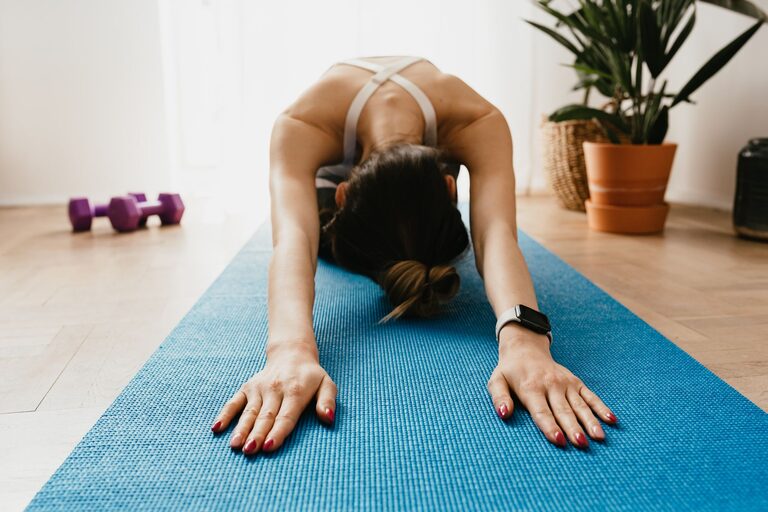
7. Child’s Pose
– Kneel on the floor with your toes together and knees apart.
– Sit back on your heels and stretch your arms forward on the floor.
– Rest your forehead on the ground and breathe deeply.
Creating Your Stretching Routine
To build a consistent stretching habit at home, follow these tips:
– Set a regular time: Morning, evening, or after exercise.
– Start small: Begin with 5-10 minutes and gradually increase.
– Use a mat or soft surface: For comfort and support.
– Combine with deep breathing: Enhances relaxation and improves stretch effectiveness.
– Listen to your body: Adjust stretches as needed depending on your flexibility and comfort.
Helpful Tools for Stretching at Home
While not necessary, some tools can enhance your stretching routine:
– Yoga mat: Provides cushioning.
– Stretching strap or towel: Helps reach difficult areas like hamstrings.
– Foam roller: Useful for releasing muscle tightness.
– Mirror: Helps maintain correct posture.
Final Thoughts
Stretching at home is a simple and effective way to enhance your physical and mental well-being. By starting slow, practicing regularly, and paying attention to your body, you’ll gradually improve your flexibility and feel more relaxed throughout the day. Remember, consistency is key—and the best time to start is now!
If you’re interested, there are plenty of free videos and apps available that can guide you through beginner stretching routines at home. Enjoy the journey to a more flexible and comfortable you!